The Generations of Yitschaq (Part Two)
Genesis 26:1 – There was a famine in the land, besides the earlier famine that happened in the days of Avraham. Yitschaq went to Gerar, to Avimelekh, king of the Pelishtim.

Genesis 26:2 – Yahweh appeared to him. “Do not go down to Mitsrayim,” Yahweh said. “Settle in the land which I will tell you about.”

Genesis 26:3 – “Stay in this land, and I will be with you and bless you. I will give all of these lands to you and your seed, and I will maintain the oath that I swore to your father, Avraham.”
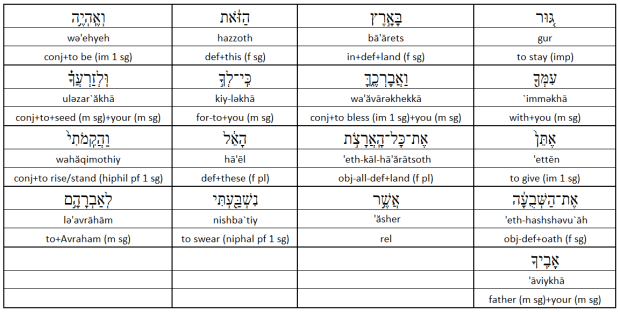
Genesis 26:4 – “I will multiply your seed like the stars in the sky, and I will give them all of these lands. Through them, all nations will be blessed…”
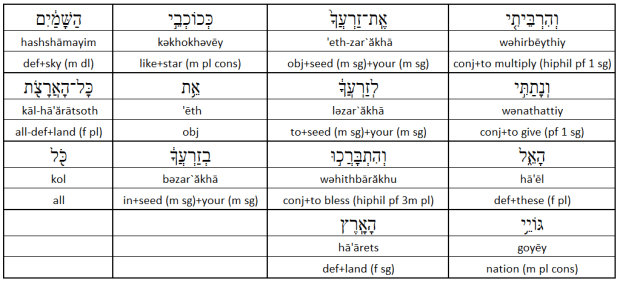
Genesis 26:5 – “…because Avraham listened to my voice, and he kept my observances, commandments, statutes, and instructions.”
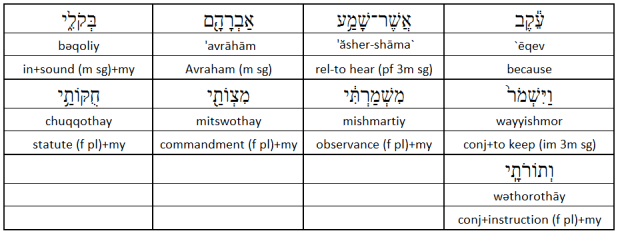
For the last word, Avraham literally kept Yahweh’s “torahs.”
Genesis 26:6 – Yitschaq dwelled in Gerar.

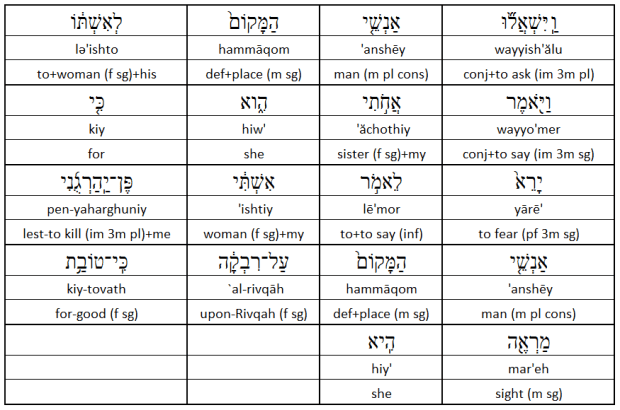
Genesis 26:7 – The men of that place asked about his wife. “She is my sister,” he said. He feared that they would kill him if he said that she was his wife, for she was beautiful.
Okay, so at this point, this is the third retelling of this story. It’s generally accepted that these three stories, termed “wife-sister narratives”, represent different variations of a single story. According to the Jewish Encyclopedia, these repetitions are mainly there to show that Avraham and Yitschaq are under Yahweh’s protection.
There are plenty of similar examples throughout – the two creation stories side by side in Genesis 1 and 2, or the different explanations given for the name of Beersheba. You’ve got a collection of stories from multiple sources and peoples and times, so the text is inevitably fraught with contradictions and repetitions.
Genesis 26:8 – When Yitschaq had been there for a long time, Avimelekh, king of the Pelishtim, looked out from a window. He saw Yitschaq laughing with his wife Rivqah.

Genesis 26:9 – Avimelekh called to Yitschaq. “She’s surely your wife,” he said. “Why did you say that she’s your sister?” “I thought I’d be killed,” Yitschaq said.
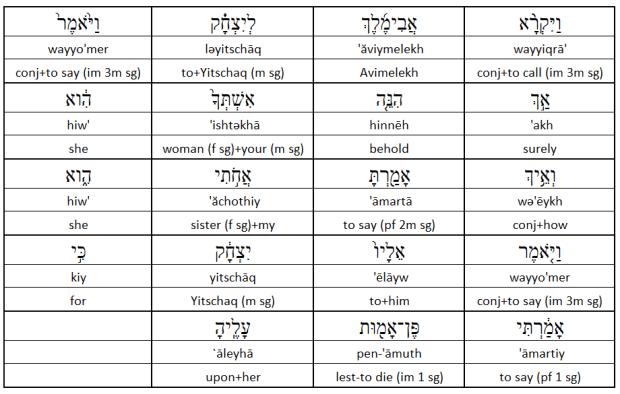
Genesis 26:10 – “What is this you’ve done to us? One of us could have easily slept with your wife, and then you would have brought guilt upon us.”

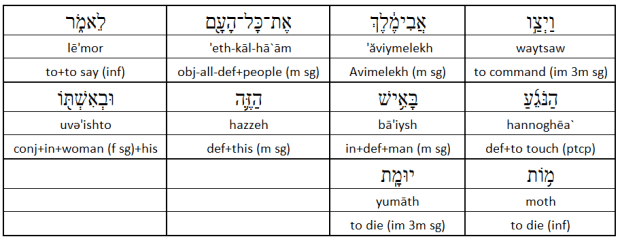
Genesis 26:11 – Avimelekh then commanded all of his people. “Anyone who touches this man or his wife will surely die,” he said.
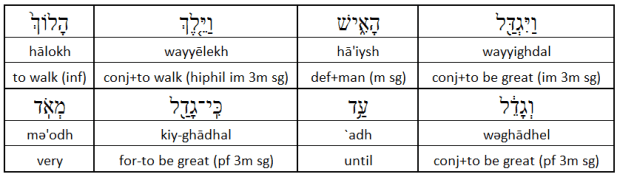
Genesis 26:12 – Yitschaq planted in that land. That year, he reaped a hundredfold, and Yahweh blessed him.

Genesis 26:13 – He carried on, becoming very wealthy.
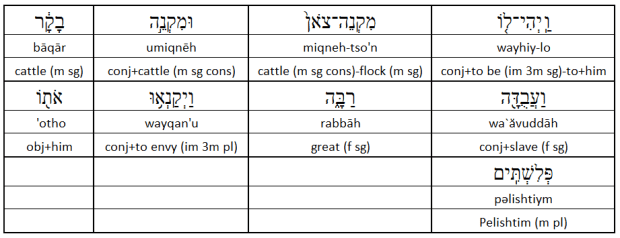
Genesis 26:14 – He had flocks of sheep, cattle, and a great household, and the Pelishtim envied him.
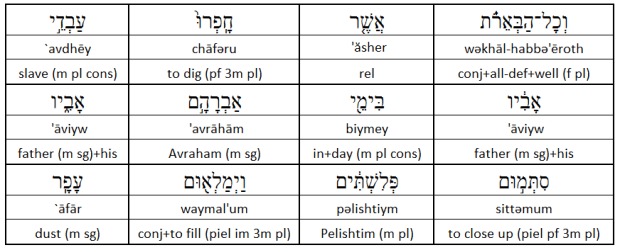
Genesis 26:15 – They closed up all the wells that his father’s slaves had dug during the days of Avraham, and they filled them with dirt.
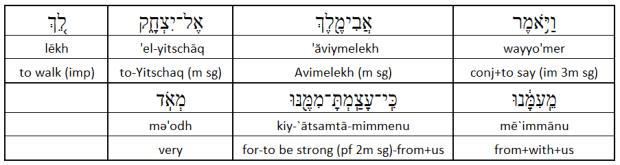
Genesis 26:16 – “Depart from us,” Avimelekh said to Yitschaq. “You have grown too powerful for us.”
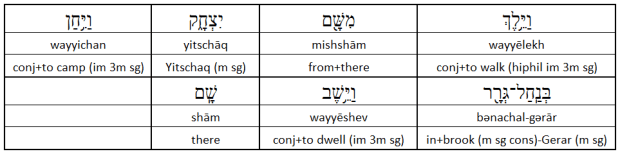
Genesis 26:17 – Yitschaq departed from there and camped in the valley of Gerar, and he dwelled there.
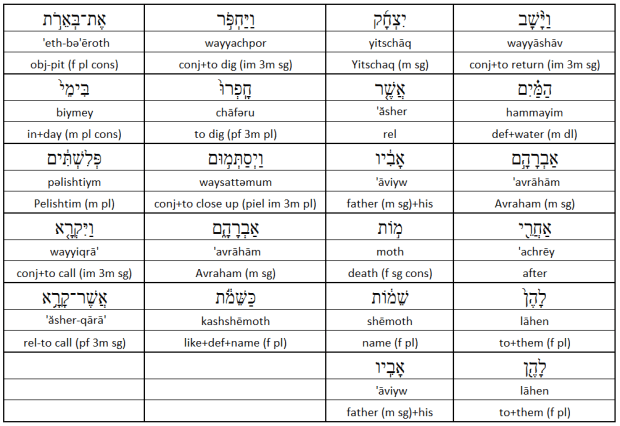
Genesis 26:18 – Yitschaq reopened the wells dug in the days of his father, Avraham, which the Pelishtim had closed up after Avraham’s death. He renamed them the same names that his father had used.
Genesis 26:19 – Yitschaq’s slaves dug in the valley, and they found a well of living water.
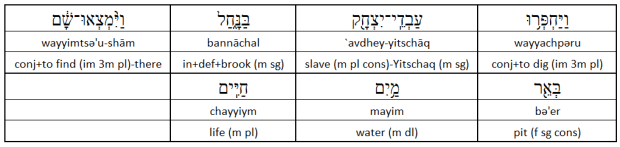
Genesis 26:20 – The shepherds of Gerar quarreled with Yitschaq’s shepherds. “This is our water,” they said. Yitschaq named the well Contention, because they contended with him.
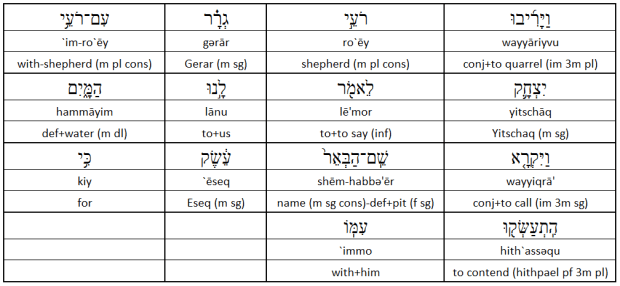
As always, the pun is pretty clear in Hebrew, and I’ve tried to preserve it in English.
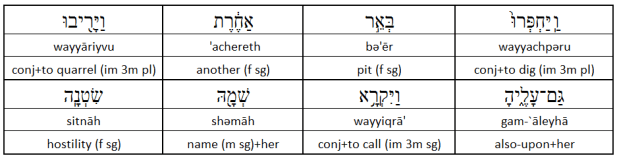
Genesis 26:21 – They dug another well, and they also quarreled over that one, and he named it Hostility.
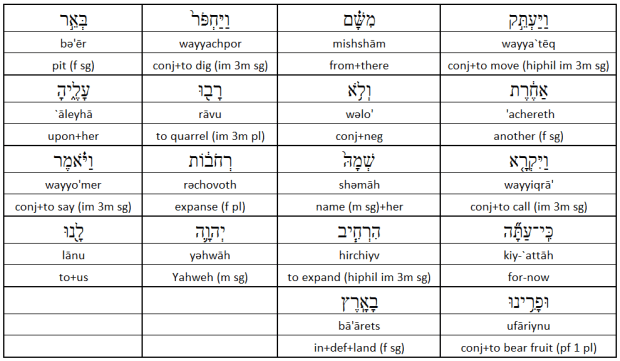
Genesis 26:22 – He moved from there and dug another well, and they did not quarrel over that one. Yitschaq named it Expanse, saying, “Yahweh has given us space, and we will bear fruit in the land.”
Genesis 26:23 – He went up from there to the Pit of the Oath.

Genesis 26:24 – That night, Yahweh appeared to him. “I am the god of your father, Avraham,” he said. “Don’t be afraid. I am with you, and I will bless you. I will multiply your seed for the sake of Avraham, my slave.”

Genesis 26:25 – Yitschaq built an altar there, and he called on the name of Yahweh. He camped there, and his slaves dug a well.
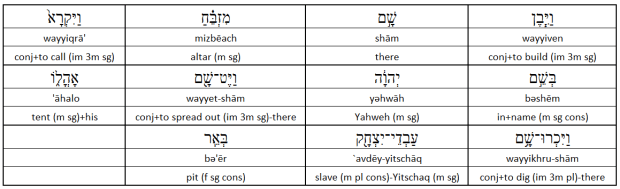
Genesis 26:26 – Avimelekh came to him from Gerar, with his companion Achuzzath and Pikhol, prince of his host.

Genesis 26:27 – “Why have you come to me?” Yitschaq asked them. “You hate me, and you sent me away from you.”
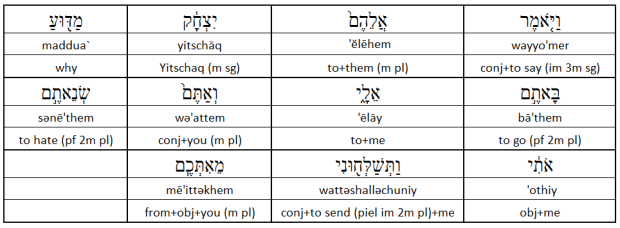
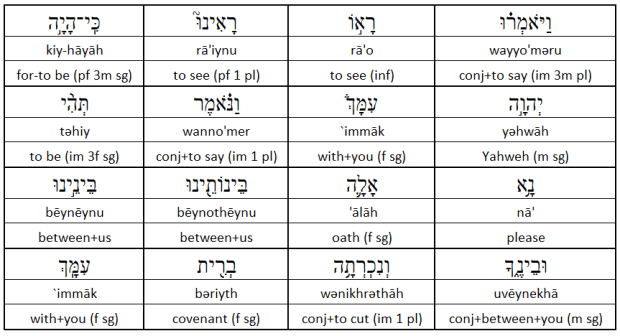
Genesis 26:28 – “We clearly saw that Yahweh was with you,” they said. “Please, let there be an oath between us and you. Let’s make a covenant.”
Genesis 26:29 – “Do no evil to us, just as we’ve never harmed you. We were good to you, and we sent you away in peace. You are now the blessed of Yahweh.
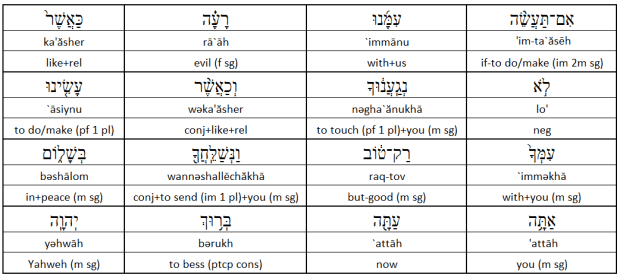
Genesis 26:30 – Yitschaq made a feast for them, and they ate and drank.
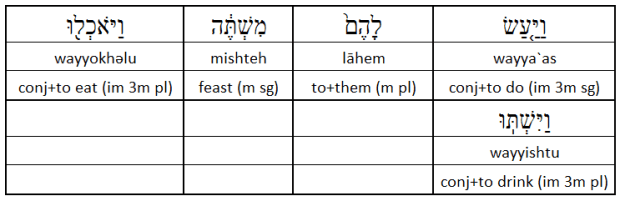
Genesis 26:31 – They rose early in the morning, and every man swore to the other. Yitschaq sent them away, and they left him in peace.
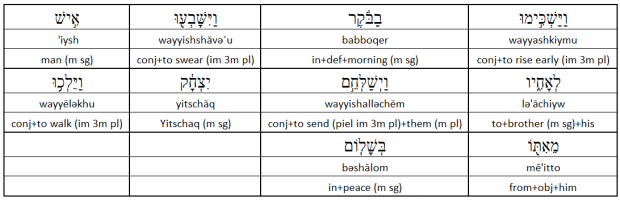
Genesis 26:32 – That day, Yitschaq’s slaves came to him and told him about the well that they had dug, saying that they had found water.
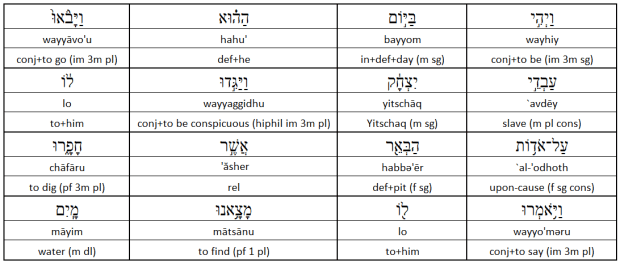
Genesis 26:33 – He called it Oath, and for that reason the name of the city is the Pit of the Oath until this day.
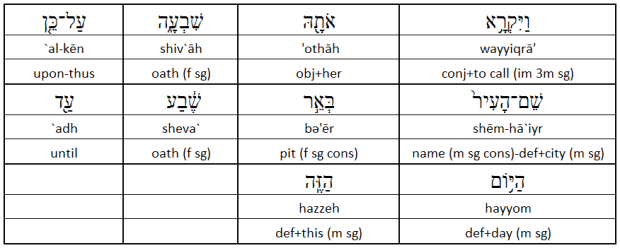
Another explanation for that name.
Genesis 26:34 – Esaw was forty years old when he married Yehudith, daughter of Be’eriy the Chittiy, and Basemath, daughter of Eylon the Chittiy.
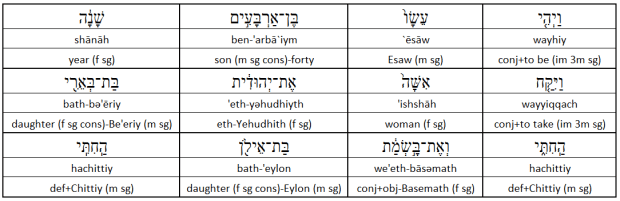
Genesis 26:35 – They brought misery to Yitschaq and Rivqah.
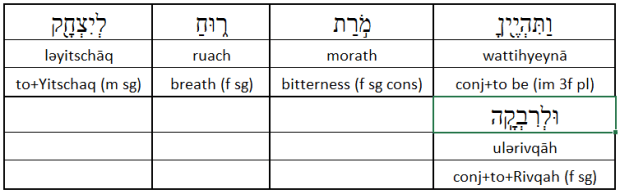
Esaw’s wives were “bitterness of breath” or “bitterness of spirit” to his parents.
Full Text
There was a famine in the land, besides the earlier famine that happened in the days of Avraham. Yitschaq went to Gerar, to Avimelekh, king of the Pelishtim. Yahweh appeared to him.
“Do not go down to Mitsrayim,” Yahweh said. “Settle in the land which I will tell you about. Stay in this land, and I will be with you and bless you. I will give all of these lands to you and your seed, and I will maintain the oath that I swore to your father, Avraham. I will multiply your seed like the stars in the sky, and I will give them all of these lands. Through them, all nations will be blessed, because Avraham listened to my voice, and he kept my observances, commandments, statutes, and instructions.”
Yitschaq dwelled in Gerar. The men of that place asked about his wife.
“She is my sister,” he said. He feared that they would kill him if he said that she was his wife, for she was beautiful.
When Yitschaq had been there for a long time, Avimelekh, king of the Pelishtim, looked out from a window. He saw Yitschaq laughing with his wife Rivqah. Avimelekh called to Yitschaq.
“She’s surely your wife,” he said. “Why did you say that she’s your sister?”
“I thought I’d be killed,” Yitschaq said.
“What is this you’ve done to us? One of us could have easily slept with your wife, and then you would have brought guilt upon us.”
Avimelekh then commanded all of his people.
“Anyone who touches this man or his wife will surely die,” he said.
Yitschaq planted in that land. That year, he reaped a hundredfold, and Yahweh blessed him. He carried on, becoming very wealthy. He had flocks of sheep, cattle, and a great household, and the Pelishtim envied him. They closed up all the wells that his father’s slaves had dug during the days of Avraham, and they filled them with dirt.
“Depart from us,” Avimelekh said to Yitschaq. “You have grown too powerful for us.”
Yitschaq departed from there and camped in the valley of Gerar, and he dwelled there. Yitschaq reopened the wells dug in the days of his father, Avraham, which the Pelishtim had closed up after Avraham’s death. He renamed them the same names that his father had used. Yitschaq’s slaves dug in the valley, and they found a well of living water.
The shepherds of Gerar quarreled with Yitschaq’s shepherds.
“This is our water,” they said.
Yitschaq named the well Contention, because they contended with him. They dug another well, and they also quarreled over that one, and he named it Hostility. He moved from there and dug another well, and they did not quarrel over that one. Yitschaq named it Expanse, saying, “Yahweh has given us space, and we will bear fruit in the land.”
He went up from there to the Pit of the Oath. That night, Yahweh appeared to him.
“I am the god of your father, Avraham,” he said. “Don’t be afraid. I am with you, and I will bless you. I will multiply your seed for the sake of Avraham, my slave.”
Yitschaq built an altar there, and he called on the name of Yahweh. He camped there, and his slaves dug a well. Avimelekh came to him from Gerar, with his companion Achuzzath and Pikhol, prince of his host.
“Why have you come to me?” Yitschaq asked them. “You hate me, and you sent me away from you.”
“We clearly saw that Yahweh was with you,” they said. “Please, let there be an oath between us and you. Let’s make a covenant. Do no evil to us, just as we’ve never harmed you. We were good to you, and we sent you away in peace. You are now the blessed of Yahweh.
Yitschaq made a feast for them, and they ate and drank. They rose early in the morning, and every man swore to the other. Yitschaq sent them away, and they left him in peace. That day, Yitschaq’s slaves came to him and told him about the well that they had dug, saying that they had found water. He called it Oath, and for that reason the name of the city is the Pit of the Oath until this day.
Esaw was forty years old when he married Yehudith, daughter of Be’eriy the Chittiy, and Basemath, daughter of Eylon the Chittiy. They brought misery to Yitschaq and Rivqah.
 Translate the Torah